
Cedar Elm (Ulmus crassifolia)
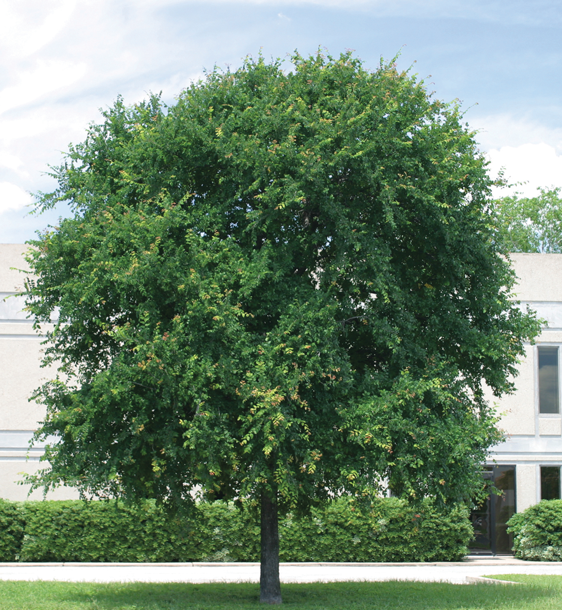
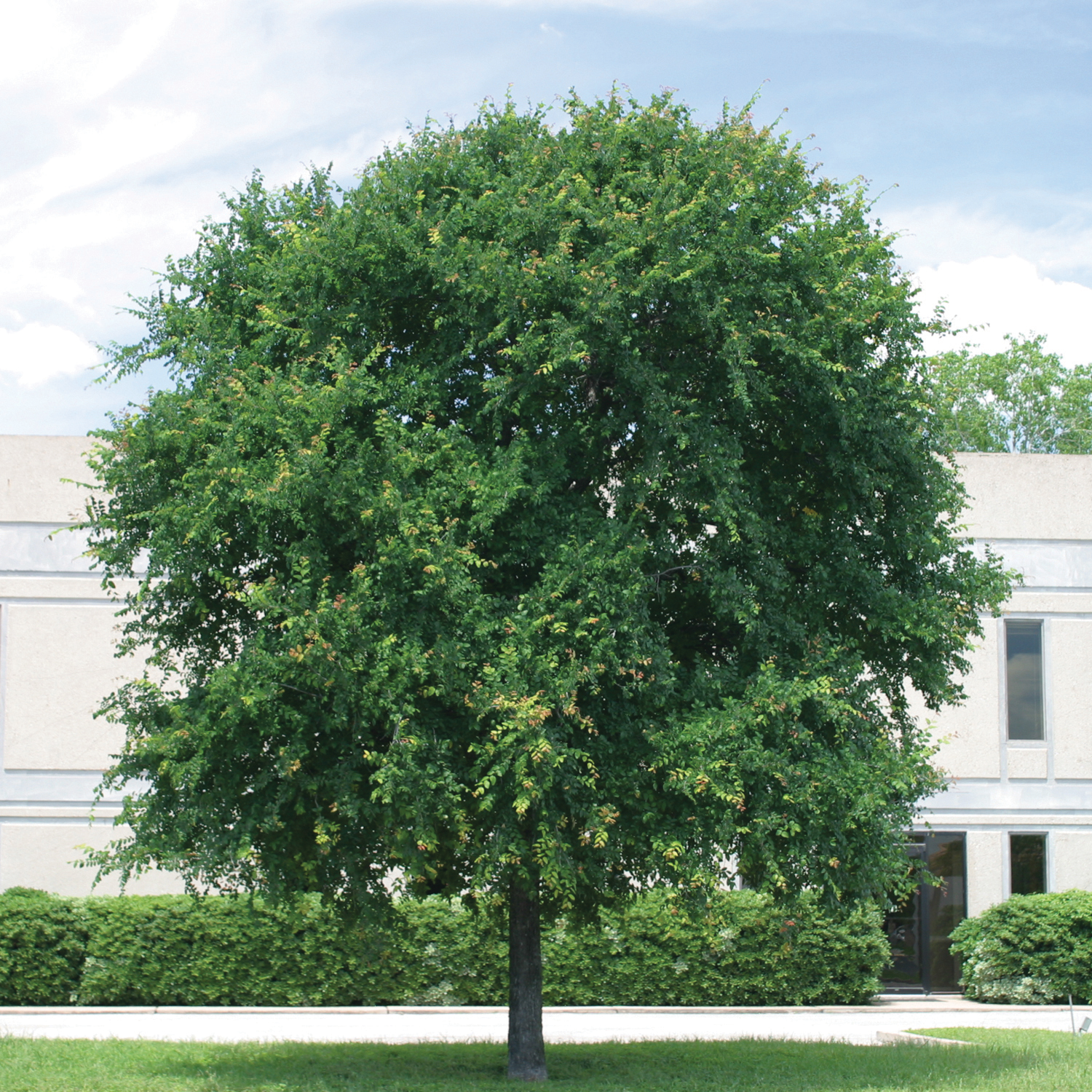
Cedar Elm is a native tree that can be found throughout Texas, Oklahoma, Arkansas, Louisiana and even east to New York.
- Is found on limestone soils.
- Can attain a height of more than 90 feet.
- Has slender, drooping branches and a rounded “crown” appearance.
- Has brown, reddish to gray bark that has flattened ridges and broken into thin loose scales.
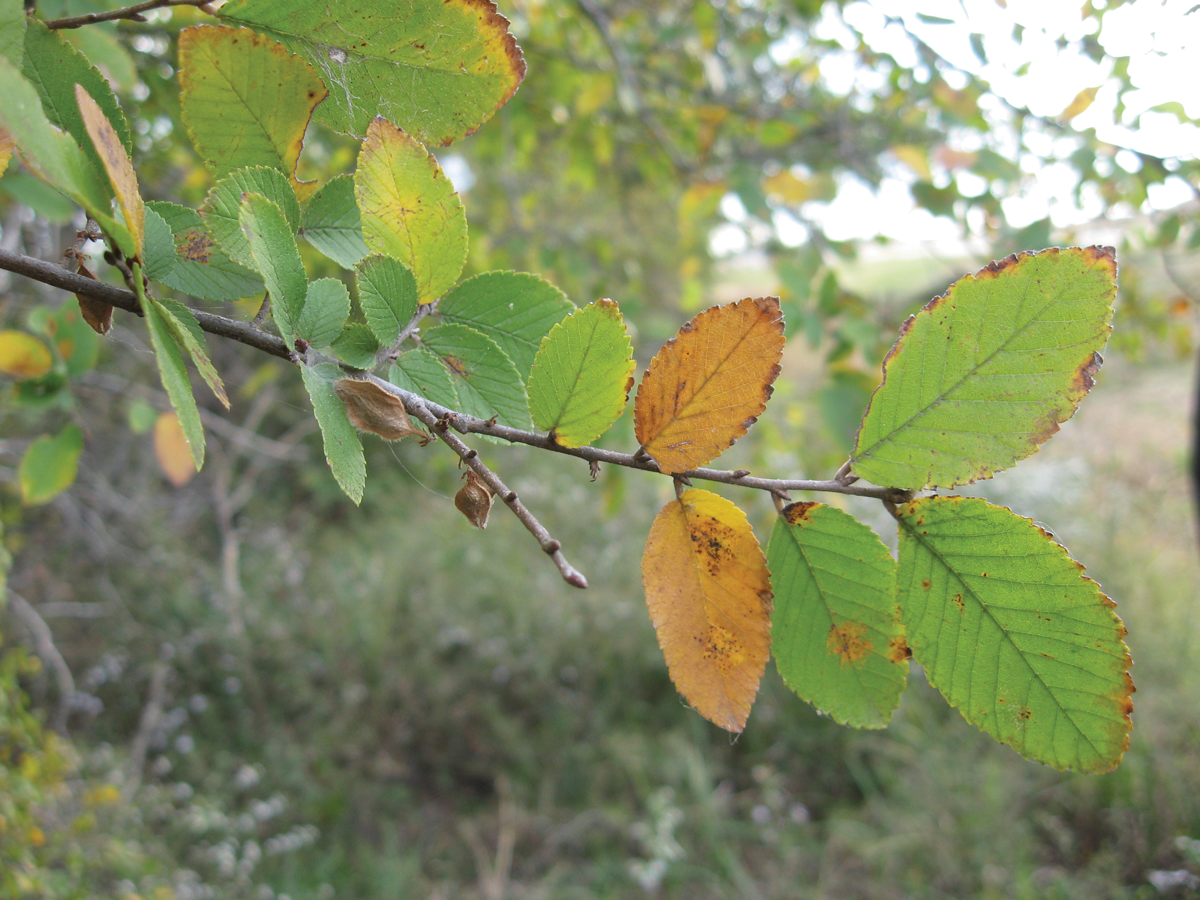
- The dark green leaves can be up to 2 inches long, but most are shorter, with a very rough feel and serrated edges.
The Cedar Elm is often confused with its relative, the Winged Elm, because it sometimes can have corky wings on the stems or twigs.
Cedar Elm can become quite invasive on uplands and bottomlands if left unchecked and is quick to become a dense thicket or a problem in the pasture.
Cedar Elm is utilized by livestock on occasion but is generally thought of as good deer browse. It is the only native fall flowering elm and the seeds are a favorite of squirrels and other wildlife species.
Cedar Elm can be controlled by mechanical and chemical methods if it becomes an issue on grazing lands.
Editor’s note: Kent Ferguson, retired rangeland management specialist from USDA Natural Resources Conservation Service (NRCS), is providing us with plant identification photo stories to help ranchers identify those forbs, forages and species growing in the pastures. Additional photos provided by USDA NRCS.
Cedar Elm is excerpted from the April 2018 issue of The Cattleman magazine.