
Nuttall Deathcamas (Zigadenus nuttallii)
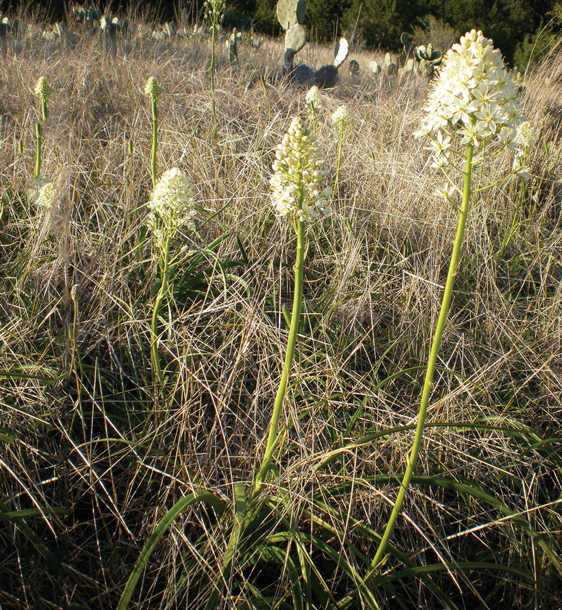
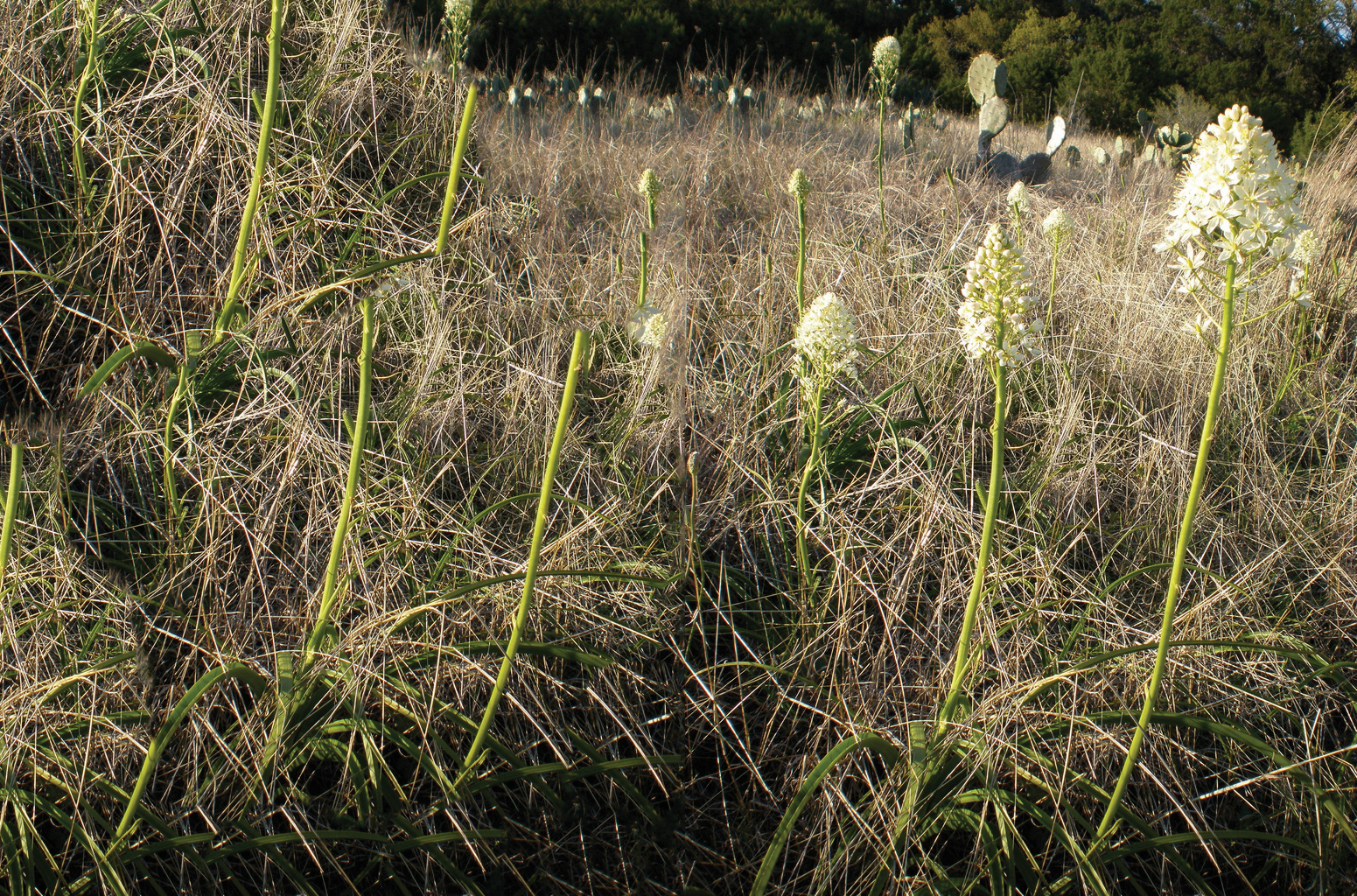
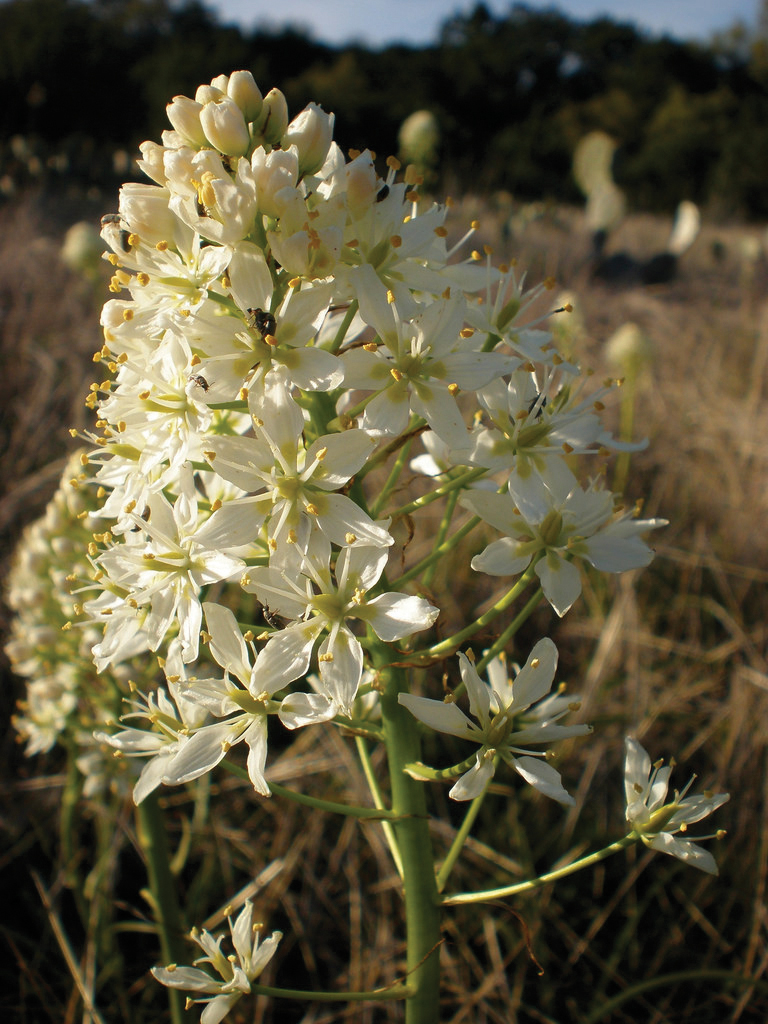
Nuttall deathcamas is a perennial cool-season native plant that is very toxic to humans and livestock. It can be found in a variety of terrains, including prairies, savannas, rocky sites and riparian areas throughout most of the state of Texas.
- Has basal, curved leaves that may be from 1 to 2 feet in length and about a half inch in diameter
- Has a main stalk supporting a creamy white to yellow spike of flowers that yield egg-like seed capsules
- Can be very conspicuous in a pasture because it tends to grow in colonies and the blooms are showy
- Often confused with wild onion because they often grow in the same habitat
Nuttall deathcamas contains alkaloids that can prove deadly to all livestock species. Sheep are usually the species of concern as they consume the plant in early spring when forage is short. Many cases that have been reported are from humans mistaking the plant for wild onion.
All parts of the plant are poisonous even when dry.
Ingestion causes excessive salivation, vomiting, weakness, difficulty breathing, irregular pulse, coma and death.
Nuttall deathcamas does have a good side. The pollen and nectar are utilized by a wide variety of insects, which are not affected by the poison.
Good grazing management and providing adequate forage for grazing animals is always the best prevention for poisonous plant problems. If you have a population of this plant, do not allow grazing animals — especially sheep — access to the pasture or pastures unless supplemental feed is provided.
Editor’s note: Kent Ferguson, retired rangeland management specialist from USDA Natural Resources Conservation Service (NRCS), is providing us with plant identification photo stories to help ranchers identify those forbs, forages and species growing in the pastures. Additional photos provided by USDA NRCS.
Nuttall Deathcamas is excerpted from the March 2017 issue of The Cattleman magazine.