
Pink Smartweed (Polygonum pensylvanicum)
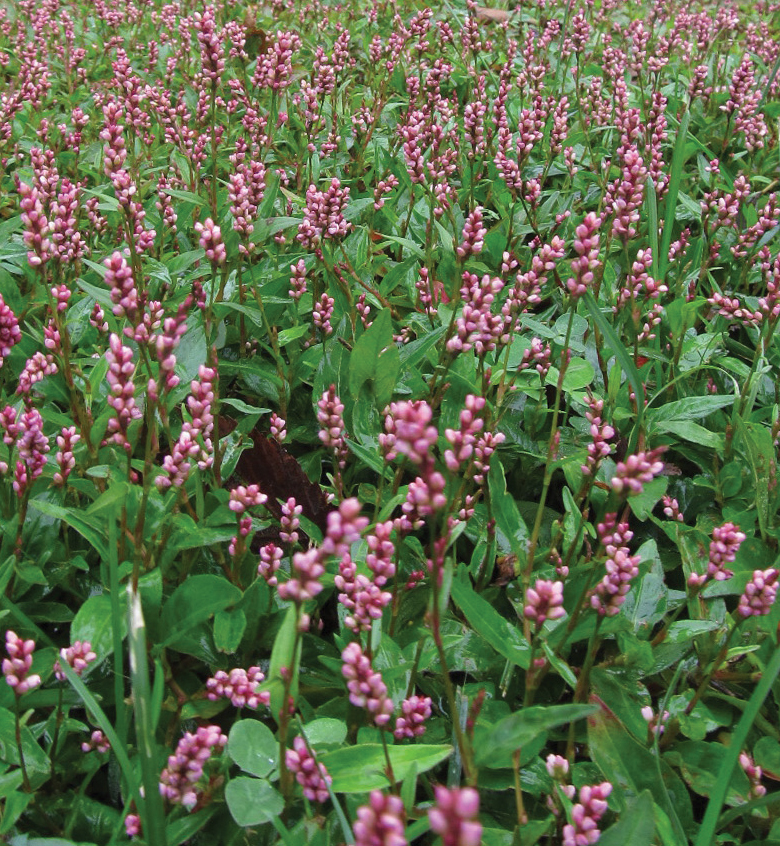
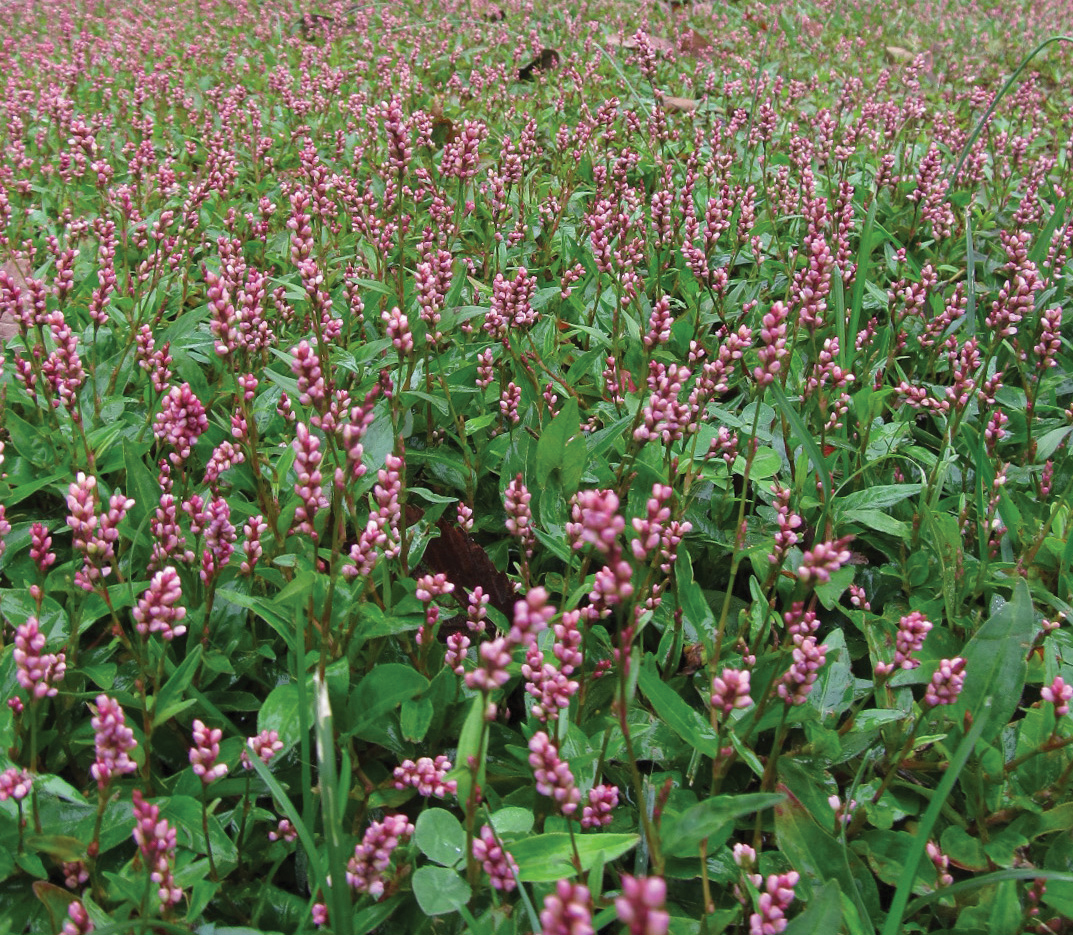
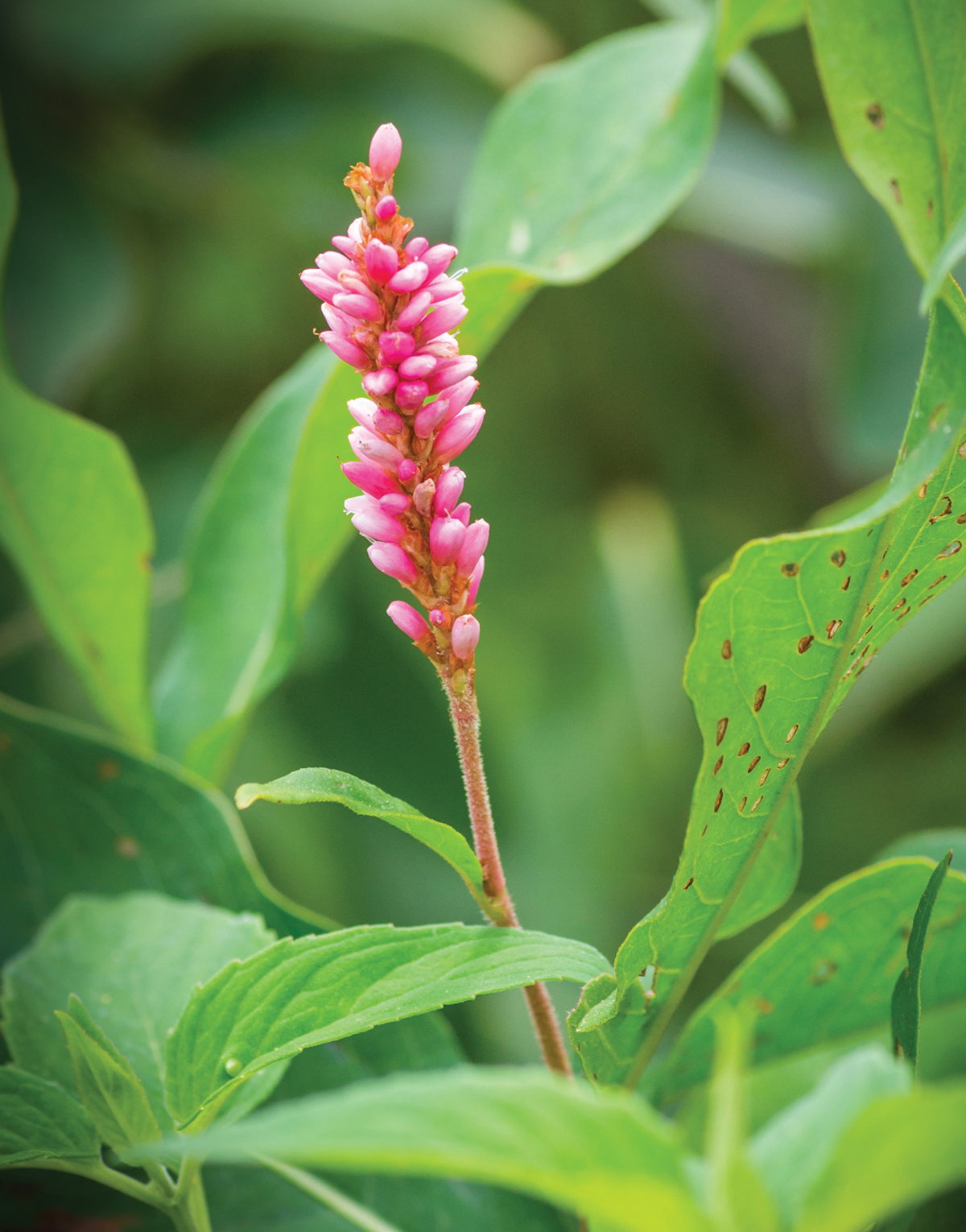
Pink Smartweed is an annual forb or “weed” that is in the buckwheat family. It is found throughout the state growing in wet, poorly drained sites such as roadside ditches, marshes, swamps, shallow ponds, and lakes.
- Grows from a strong tap root with many-branched stems that can reach a height of more than 3 feet.
- It will have red nodes. As the stems mature it will become entirely red. Younger growth will be green with less red on the nodes.
- The plant has simple alternate lance-shaped and slightly folded leaves that grow from the midrib. The leaves can reach a length of 8 inches with wavy margins.
- Flowers are pinkish-white to pink 5-parted sepals that form in 1/2-inch thick flower clusters, or “racemes,” on the tips of stems.
- Produces a shiny black seed, resembling a round lens, that will be from 1/8 to 3/16 inch in diameter.
Pink Smartweed seeds are utilized by dove, quail, turkey, songbirds, and are highly prized by waterfowl. It is one of the favorite foods of wintering ducks in the Playa Lakes region of the Panhandle. This seed is sold commercially to establish feeding grounds in wet areas for overwintering waterfowl.
Pink Smartweed is not considered a palatable plant for domestic livestock, although whitetail deer will eat the leaves.
Pink Smartweed will form large colonies if conditions are favorable and can sometimes become a pest in shallow water areas.
Editor’s note: Kent Ferguson, retired rangeland management specialist from USDA Natural Resources Conservation Service (NRCS), is providing us with plant identification photo stories to help ranchers identify those forbs, forages and species growing in the pastures. Additional photos provided by USDA NRCS.
Pink Smartweed is excerpted from the June 2019 issue of The Cattleman magazine.